
Responding to rough sleeping
A comprehensive and enhanced support model for people sleeping rough
The sooner a person sleeping rough can be connected to housing and support, the sooner they can benefit from these supports, improve stability and prevent longer-term homelessness. Minimising the effects of deteriorating physical and mental health, and disconnection from community and social supports will alleviate pressure on the homelessness system, paying dividends in avoided costs across the health and justice systems.
A coordinated, system-wide approach to people sleeping rough requires expanding assertive outreach services to all areas and improving their effectiveness through real time monitoring and dedicated service coordination. By-name lists and complex care coordinators maximise the impact of existing services by enabling better planned and more efficient referrals from assertive outreach to available housing and supports.
By-name lists collect close to real time data on people experiencing rough sleeping and form the basis of multi-agency case planning. Complex care coordinators then work with local services to overcome barriers faced by rough sleepers in accessing support, freeing assertive outreach workers to continue finding rough sleepers and building relationships. Together, these 3 facets – outreach, by-name lists and service coordination – provide a systematic response to improving client outcomes in the longer-term and reducing rough sleeping.
1. Establishing by-name lists and online triage
Improved data collected through byname lists across Victoria will increase our understanding of the scale of rough sleeping locally and inform investment decisions needed to reduce instances of rough sleeping. By-name lists provide real-time data to local homelessness and support services about who is sleeping rough and the support they need.
The Victorian Government will provide funding to establish a statewide approach to by-name lists to support assertive outreach teams. A new statewide data function will be established that supports assertive outreach workers to track, and case manage people sleeping rough and shift resources to where they are needed most.
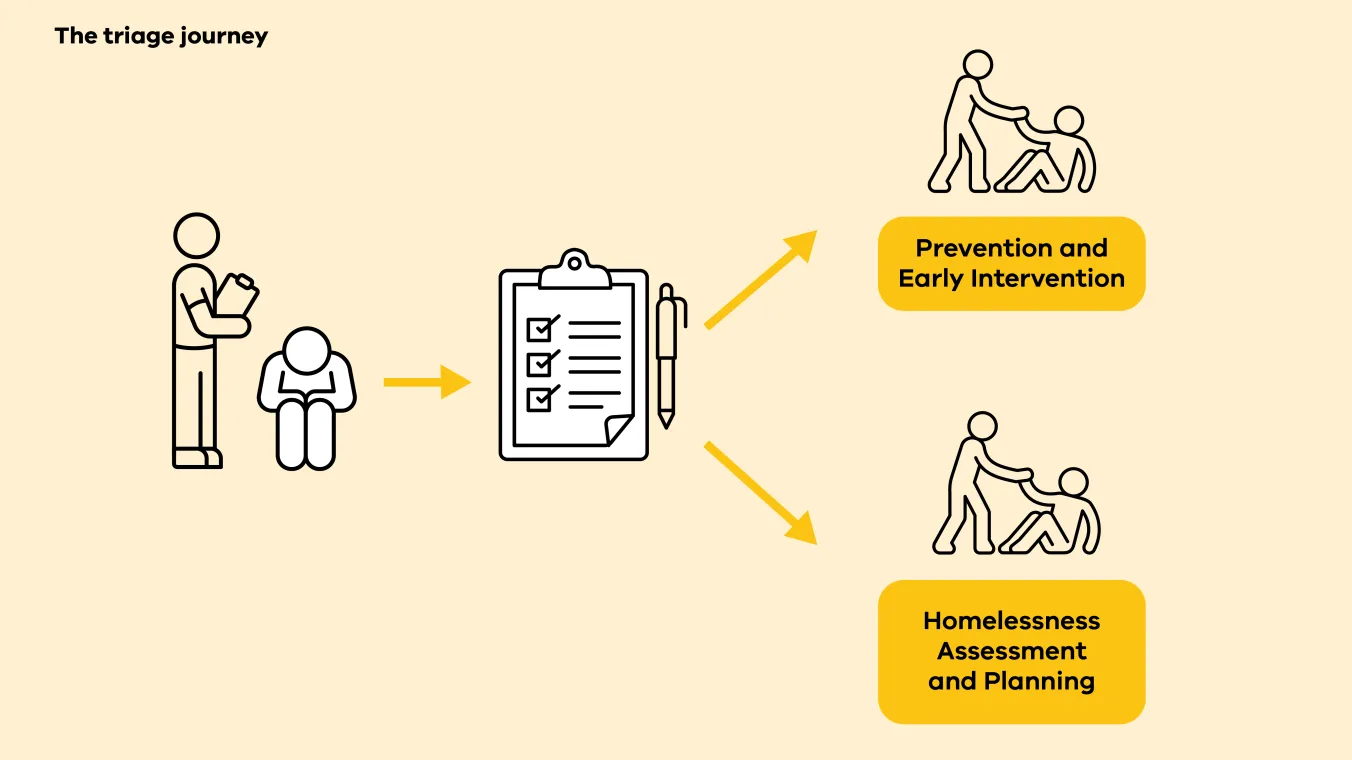
There are more than 70 homelessness entry points across Victoria, many of which have different triage processes and intake arrangements, resulting in inconsistent experiences of people seeking assistance. As part of our data-driven approach, the Victorian Government will work with the homelessness sector to trial a modern and more efficient triage tool to be used at entry points to support more people to be connected to faster and more efficient responses especially for those sleeping rough.
2. Expanding assertive outreach
The number of people sleeping rough in Victoria’s suburbs and towns has risen in recent years, which is why we are increasing investment in outreach.
Assertive outreach workers are an essential pillar of a Housing First response, building trust with people sleeping rough through persistent engagement and work to reconnect them to services and support.
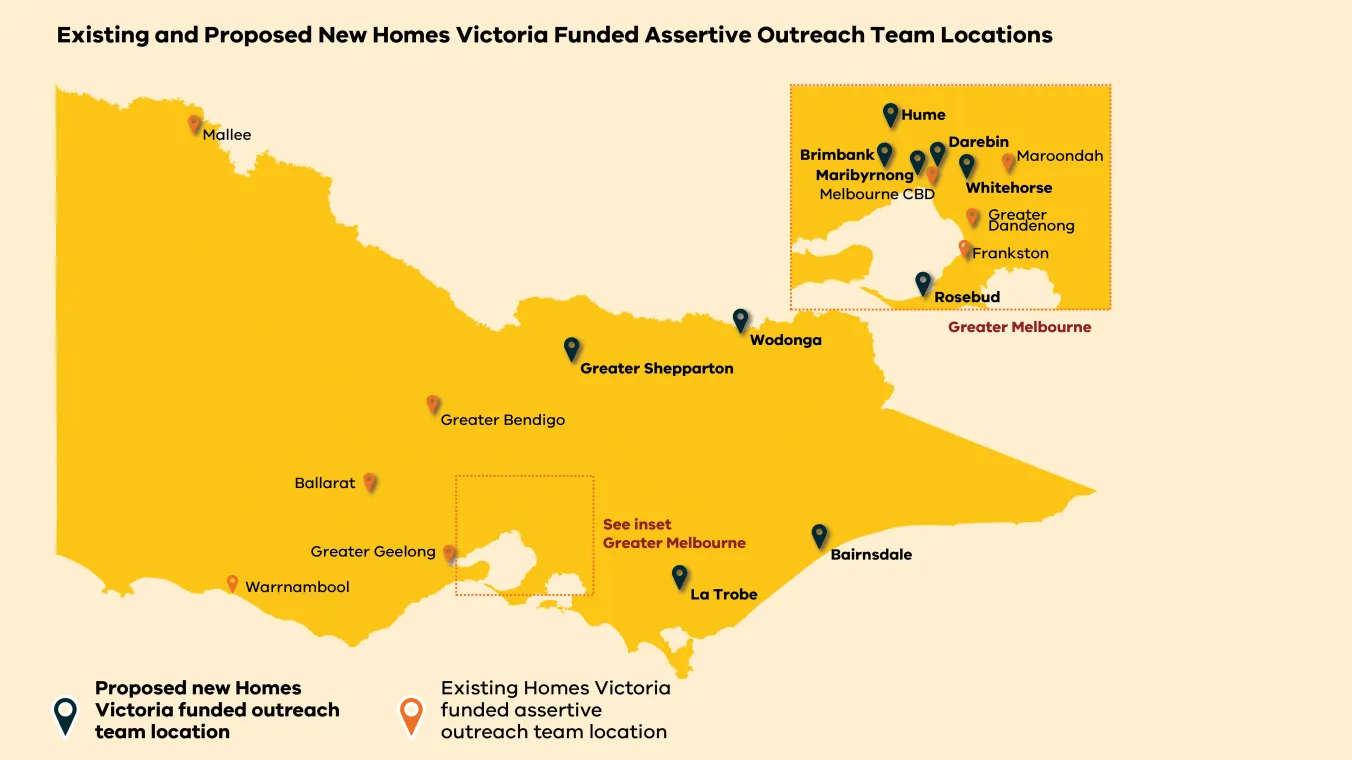
The Victorian Government is expanding to a statewide model for assertive outreach. This means that wherever people are forced to sleep rough, there will be dedicated and skilled outreach workers helping to connect them the available housing and supports.
By the end of 2026, 18 teams will be on the ground supporting people sleeping rough through persistent engagement, building their trust in the social services system.
3. Embedding service coordination and complex care
Coordination across multiple service needs is critical to tailoring client responses and overcoming barriers preventing access for people sleeping rough to the support and housing pathways needed.
We’re building a dedicated service coordination function to support assertive outreach workers across the state so they can focus on engagement and relationship building with people sleeping rough.
People at risk of or experiencing homelessness will get a more tailored response from 32 assertive outreach workers.